RYCRAWL: The Cybersecurity Upgrade Your AI Era Deserves
DR
If your business handles sensitive client or patient data, you already lock the doors, buy insurance, and run background checks. Yet the most powerful new “employee” in your office—AI—is probably operating with almost no safety check at all. This post shows why that gap is dangerous, what’s changed in cyber risk, and how a modern tool like RYCRAWL and its new Rycrawl.AI Copilot Security module can quietly become your everyday safeguard rather than another noisy tech project.
By the end, you’ll see why cybersecurity that ignores AI is now as outdated as filing cabinets with no locks—and what a practical, business-friendly fix looks like.
The New Cyber Risk No One Budgeted For
AI and large language models (LLMs) are transforming how banks, law firms, medical offices, and professional services teams work. They summarize files, draft emails, and help staff move faster. But every new AI capability creates a new path for attackers—often in ways traditional security tools were never built to see.
From a business owner’s point of view, that creates a quiet inner tension:
- “We need AI to stay competitive.”
- “We must protect client data and privacy.”
- “We don’t really know what AI is doing under the hood.”
You’re not alone. In one AI security pitch, 93% of CISOs cited AI security as a top‑three concern for 2025. OWASP, the global non‑profit known for its “Top 10” security risks, has now published a dedicated Top 10 for LLM and Generative AI because the attack patterns are different and more subtle than classic web hacks.
Thing to remember: AI doesn’t just add productivity; it adds invisible attack surface. Cybersecurity that doesn’t account for AI is already behind.
Pause for a second and jot down one system where your team already uses AI (Copilot, ChatGPT, document automation)—that’s where your new risk likely lives.
Why Old-School Cybersecurity Isn’t Enough Anymore
Most businesses already invest in some mix of:
- Firewalls
- Antivirus
- Endpoint protection
- Vulnerability scanners
- Cyber insurance
These are the digital equivalents of alarms, sprinklers, and locks. They’re essential—but they were designed for a world of websites, email, and laptops, not for AI agents that read your contracts, patient notes, or financial spreadsheets in real time.
Modern LLM systems face new classes of risk, such as:
- Prompt injection: Tricking an AI into ignoring rules and revealing sensitive data or taking harmful actions.
- Sensitive information disclosure: AI pulling and exposing data it should never surface to that user.
- Data and model poisoning: Attackers corrupting the data or workflows that AI relies on.
- Excessive “agency”: AI tools quietly doing too much, across too many systems, without proper guardrails.
Trend Micro’s summary of the OWASP Top 10 for LLM applications notes that these AI risks require specialized controls beyond traditional application security. In other words, your existing tools were never meant to understand how an AI “thinks,” what it sees, or how it might be manipulated.
Key insight: Cyber attacks have evolved. They now target how AI reasons and what it can access. Your protection needs to be at least as sophisticated as the attackers—and that means monitoring AI itself, not just your servers.
Save this thought: “If AI is touching client data, we need AI‑aware security.”
Meet RYCRAWL: Vulnerability Management for the AI Era
This is where RYCRAWL comes in. RYCRAWL is an AI and LLM vulnerability management platform built from the ground up to deal with the unique security challenges of artificial intelligence systems—especially AI agents and tools woven into daily business workflows.
In simple terms, think of RYCRAWL as:
- A security control room for your AI systems
- A traffic camera watching how AI agents behave
- An early‑warning system when something looks off
The Rycrawl platform is designed to:
- Detect vulnerabilities in LLMs and AI agents
- Log and analyze prompt activity using Model Context Protocol (MCP)
- Isolate suspicious or rogue agents in a secure sandbox
- Visualize issues in a central dashboard
- Support compliance with emerging AI governance and privacy standards
Rycrawl’s proprietary MCP server can live inside your network, giving you:
- Security: Reduced exposure to the public internet and fewer data‑leakage paths
- Low latency: Fast, real‑time detection for misbehaving AI agents
- Direct access: Rich logs and context streams for deeper analysis
- Segmentation control: Ability to isolate AI components in their own security zones
The company itself is built by experienced cybersecurity professionals; for example, the CEO previously led vulnerability management upgrades at Qualys and Tenable and has over 25 years in enterprise security architecture.
Bottom line: RYCRAWL turns AI from a “black box risk” into a monitored, managed, and more predictable part of your environment—without you needing to become an AI security expert.
If you do one thing after reading: note “AI vulnerability management” as a capability to ask any IT or MSP partner about.

Rycrawl.AI Copilot Security: A Health Check for Your Microsoft 365 Copilot
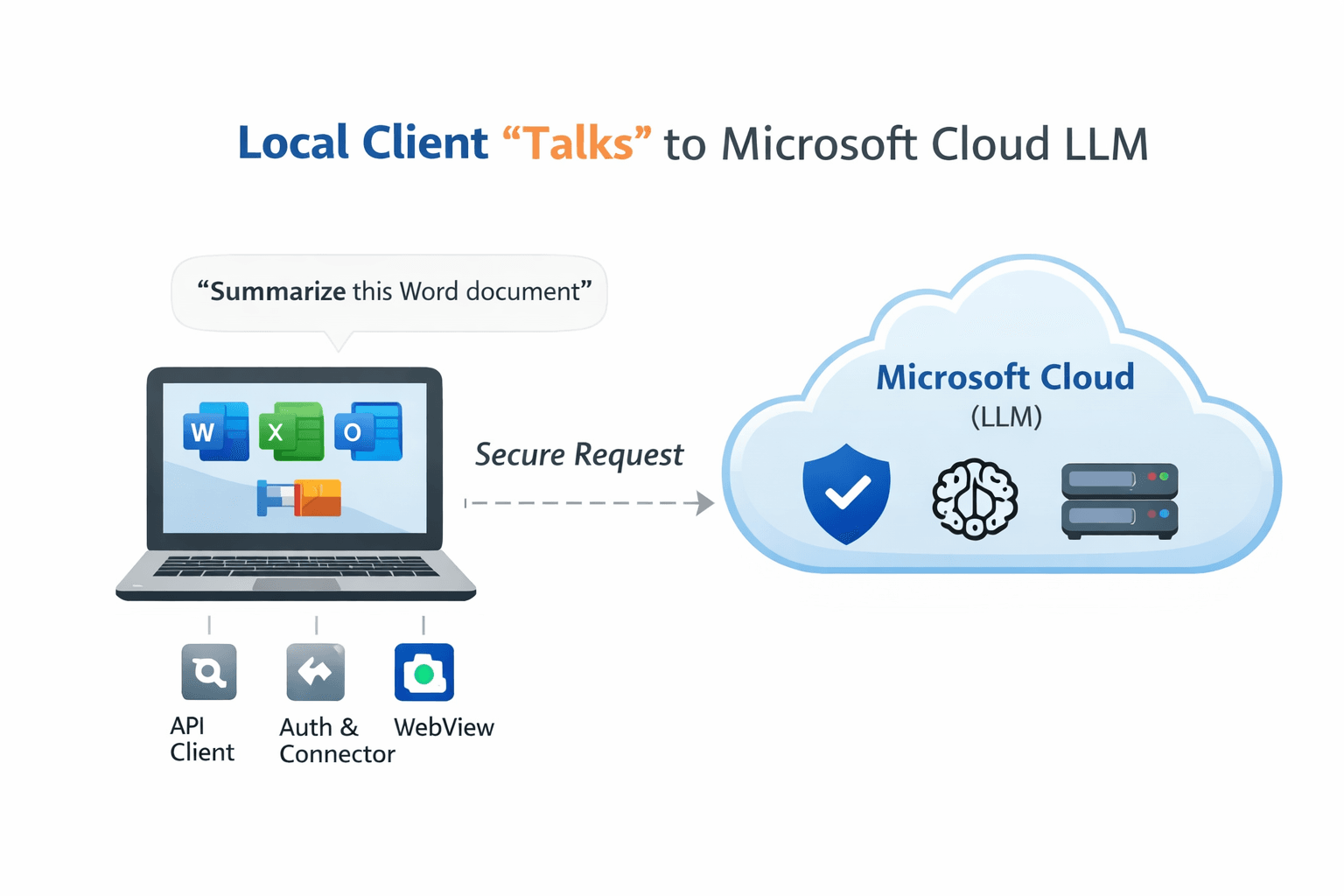
Now let’s get specific about a scenario many regulated businesses are dealing with: Microsoft 365 Copilot on employee Windows machines. Copilot can search across emails, documents, and chat to help your staff move faster. It’s powerful—and that’s exactly why it needs oversight.
Rycrawl.AI Copilot Security is a purpose‑built security validation module created to scan Windows computers for AI‑specific vulnerabilities and configuration risks related to Microsoft 365 Copilot deployments. It doesn’t guess; it uses real data collected directly from each machine to understand what’s actually happening in your environment.
Key points in plain language:
- It runs 41 automated security tests across 6 categories, covering everything from unsafe configurations to risky data access paths.
- It is mapped to the OWASP LLM Top 10, which, as noted earlier, is the leading reference list of the biggest AI‑related risks.
- It focuses on Windows endpoints where your real users, real data, and real Copilot activity live—rather than just checking theoretical policies.
Think of it as a Copilot security check‑up for each workstation, answering questions like:
- Is Copilot exposed to more data than it should be?
- Are there misconfigurations that would let an attacker trick Copilot into revealing sensitive information?
- Are we complying with the privacy expectations we’ve promised clients and patients?
Microsoft emphasizes that Copilot respects your existing Microsoft 365 security and compliance controls, but it also stresses the importance of a defense‑in‑depth strategy with strong identity, least‑privilege access, and continuous evaluation. Rycrawl.AI Copilot Security effectively verifies whether your actual endpoints are aligned with that strategy.
Key insight: If your team is rolling out Copilot, not running AI‑aware endpoint checks is like giving everyone a company credit card and never looking at a single statement.
Save this list: “41 tests, 6 categories, OWASP LLM Top 10 coverage”—that’s what you want to see in any serious AI security assessment.
Treat Cybersecurity Like Insurance (But Smarter)
For professionals in regulated or privacy‑sensitive sectors—banks, law firms, medical practices, accounting firms, even sports organizations—security is no longer an optional “IT project.” It’s a basic cost of doing business, like:
- Professional liability insurance
- Compliance audits
- Physical access controls
The unspoken truth: a lot of security spend is still focused on yesterday’s threats. Cybersecurity that doesn’t account for AI and tools like Copilot is outdated and leaves a tremendous exposure gap.
Here’s a practical reframe:
- Old mindset: “We have antivirus and a firewall; we’re good.”
- New mindset: “Our AI tools also need guardrails. If AI can touch client data, it must be included in our vulnerability management.”
A few reasons this should feel worth budgeting for now:
- AI is becoming standard faster than many policies can keep up. OWASP notes LLM vulnerabilities rely on huge data sets and autonomous interactions, which demand specialized monitoring and behavior analysis.
- The AI security market is projected to reach roughly 60B USD by 2028 with a 32% CAGR, underscoring how quickly organizations are investing here.
- Early movers who define strong AI security practices are better positioned when regulators and clients start asking, “How exactly do you protect AI‑exposed data?”
RYCRAWL supports this new mindset by offering:
- Continuous visibility into AI agent behavior and vulnerabilities
- Inventory management for models, datasets, and their relationships
- Integration with your existing infrastructure vulnerability data and dashboards
- A per‑seat, per‑agent pricing model that can scale with your organization size
Thing to remember: Just as cyber insurance doesn’t replace good security practices, classic security tools don’t replace AI‑aware vulnerability management. You need both.
Take a moment and note one client or regulator who would expect you to take AI security seriously—that’s who you’re really protecting.
What To Do Next: A Simple First Step
You don’t need to become an AI engineer to protect your business. You just need to recognize that AI belongs inside your vulnerability management program and work with partners and tools built for that reality.
With RYCRAWL and Rycrawl.AI Copilot Security, the path can look like this:
- Acknowledge the gap
Admit internally: “Our current cybersecurity does not fully account for AI tools like Copilot.” - Run a focused AI risk check
Use a Copilot‑specific assessment (like Rycrawl.AI Copilot Security and its 41 tests) to see how your Windows machines and M365 environment look today. - Fold AI into ongoing vulnerability management
Treat AI agents, LLMs, and Copilot like any other critical system: they get monitored, logged, and reviewed regularly through a platform like RYCRAWL. - Communicate the upgrade to clients
Let clients or patients know that your cybersecurity controls now explicitly include AI usage—this is a simple, powerful trust signal in industries built on confidentiality.
If you’re serious about protecting client data and your reputation in an AI‑driven world, now is the time to explore AI‑aware protection. RYCRAWL and Rycrawl.AI Copilot Security are designed to help small and mid‑sized organizations get enterprise‑grade AI vulnerability management without hiring a large internal security team.
Next step: Share this post with a colleague who has been pushing for Copilot or other AI tools—and then schedule a short consultation with CyberSecurity 1st to see what RYCRAWL could look like in your environment.
#CyberSecurity1st #CyberSecurity #infosec #databreach #cloudsecurity #datasecurity #AIsecurity #LLMsecurity #MicrosoftCopilot #vulnerabilitymanagement
References:
Rycrawl.AI – AI Vulnerability Management Platform.
Rapid7 – “AI‑Driven Vulnerability Management Platform Explained.”
Microsoft – “Security for Microsoft 365 Copilot.”
Trend Micro – “What are the OWASP Top 10 risks for LLMs?”
Cloudflare – “What are the OWASP Top 10 risks for LLMs?”
Oligo Security – “OWASP Top 10 LLM, Updated 2025.”